

The 8 Essential ERP Modules Every Distributor Needs
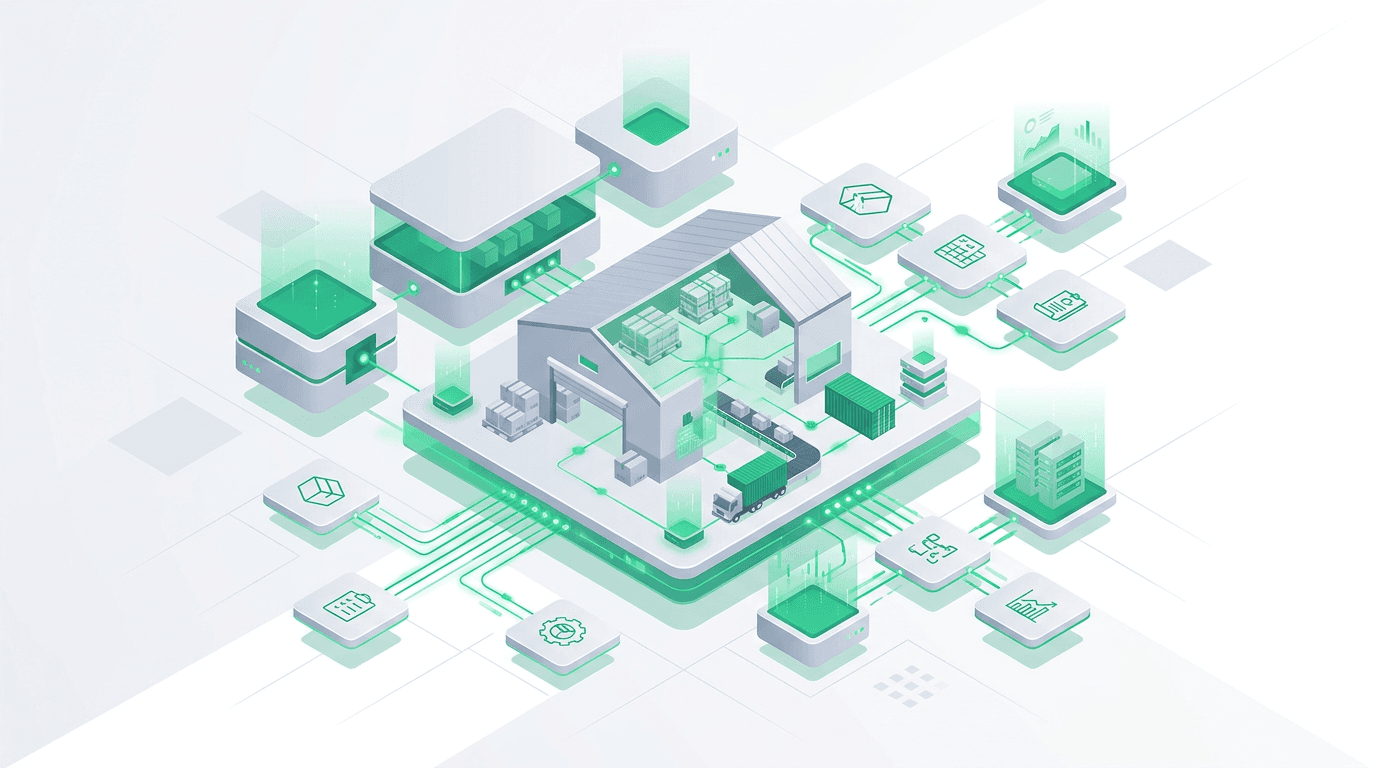
An ERP is a collection of modules that, together, run the business. For distributors, the value is not in any single module but in how tightly they connect, because the work of distribution constantly crosses between them: a sale touches inventory, purchasing, the warehouse, and the ledger within minutes. Here are the eight modules a distribution ERP needs, and why they matter most when they share one system.
What an ERP module is
A module is the part of an ERP that handles a specific business function, such as inventory or accounting. In a true distribution ERP, modules are not separate apps bolted together. They read and write the same real-time data, so an action in one is instantly reflected in the others.
The 8 essential modules
1. Inventory management
The core. Real-time quantities across warehouses and bins, native unit-of-measure conversion, and lot or serial tracking where you need it. Every other module depends on inventory being accurate.
2. Order management
Quote to order to invoice to cash, as one continuous flow. Fast order entry, backorder and allocation handling, drop-ship support, and credit terms enforced at order entry rather than discovered later.
3. Purchasing and replenishment
Demand-driven reorder points, suggested purchase orders, and vendor management. Strong purchasing folds freight and duty into landed cost on receipt so your true cost of goods is right from the start.
4. Warehouse management
Directed receiving, barcode picking, and mobile workflows that move goods quickly and accurately, updating inventory in real time as they go.
5. Customer relationship management
Order history, open quotes, balances, and credit status in one place. CRM that shares data with orders and accounting stays accurate, where a bolted-on CRM drifts out of date.
6. Accounting and financials
A built-in general ledger with AR, AP, and cash. When accounting is a native module, receiving, shipping, and invoicing post to the ledger as they happen, so inventory value and cost of goods sold are accurate by design. (More on this in accounting software for distributors.)
7. Reporting and business intelligence
Real-time dashboards and reports on margin, inventory turns, fill rates, and aging. Because every module feeds one dataset, the numbers agree across the business instead of conflicting between systems.
8. Integrations and API
The module that determines whether your ERP is open. A documented API lets you connect ecommerce, EDI, tax, freight, and BI tools, and gives modern AI a foundation to act on your live data.
Why modules should live on one platform
The reason distributors choose an integrated ERP over a stack of point solutions is simple: every seam between systems is a place for data to drift. When these eight modules share one real-time system of record, there is nothing to sync and nothing to reconcile. That unification is the efficiency, more than any individual module's feature list.
How 10X ERP delivers it
10X ERP brings all eight modules together on one API-first platform built for distribution, with 10X AI woven through every module so you can question and act on live business data in plain English. It is the unified system this guide describes, purpose-built for how distributors actually work.
To see the modules working together on your own workflows, schedule a 30-minute demo. You can also read types of ERP systems for how distribution ERP compares to other categories.
Frequently asked questions
What are the main modules of a distribution ERP? The essential modules are inventory management, order management, purchasing and replenishment, warehouse management, CRM, accounting and financials, reporting and business intelligence, and integrations or API access.
Do I need every ERP module at once? Not necessarily, but the modules are most valuable together, because distribution work constantly crosses between them. A platform where all the modules share one dataset avoids the integration cost of adding them piecemeal from different vendors.
What makes an ERP module "for distributors"? Distribution-specific modules treat units of measure, landed cost, multi-location inventory, vendor terms, and customer-specific pricing as native concepts rather than add-ons, so they reflect how a distribution business actually operates.
Ready to Transform Your Distribution Business?
Let us help you implement solutions that drive real results.
Contact Us TodayGet insights delivered to your inbox
Product updates, distribution industry insights, and company news.
Related Articles
Prepare Your Distribution Operations for 2027
A Q4 checklist for fastener, sealing and industrial distributors, with real results from distributors who gained throughput, cleaner books and faster fulfillment.

Why vacation season exposes operational gaps in distribution businesses
Every distribution business has that moment in July. A key person is out. A big order comes in. And suddenly everyone realizes the operation was running on tribal knowledge, not systems. Vacation season doesn't create operational gaps — it just makes them impossible to ignore. Here's why it happens and what distributors running on modern ERP do differently.
Supply Chain Management Software for Distributors: 7 Solutions That Matter
The seven supply chain management software capabilities that actually move the needle for distributors, from replenishment to supplier collaboration to real-time visibility.