
Supply Chain Management Software for Distributors: 7 Solutions That Matter
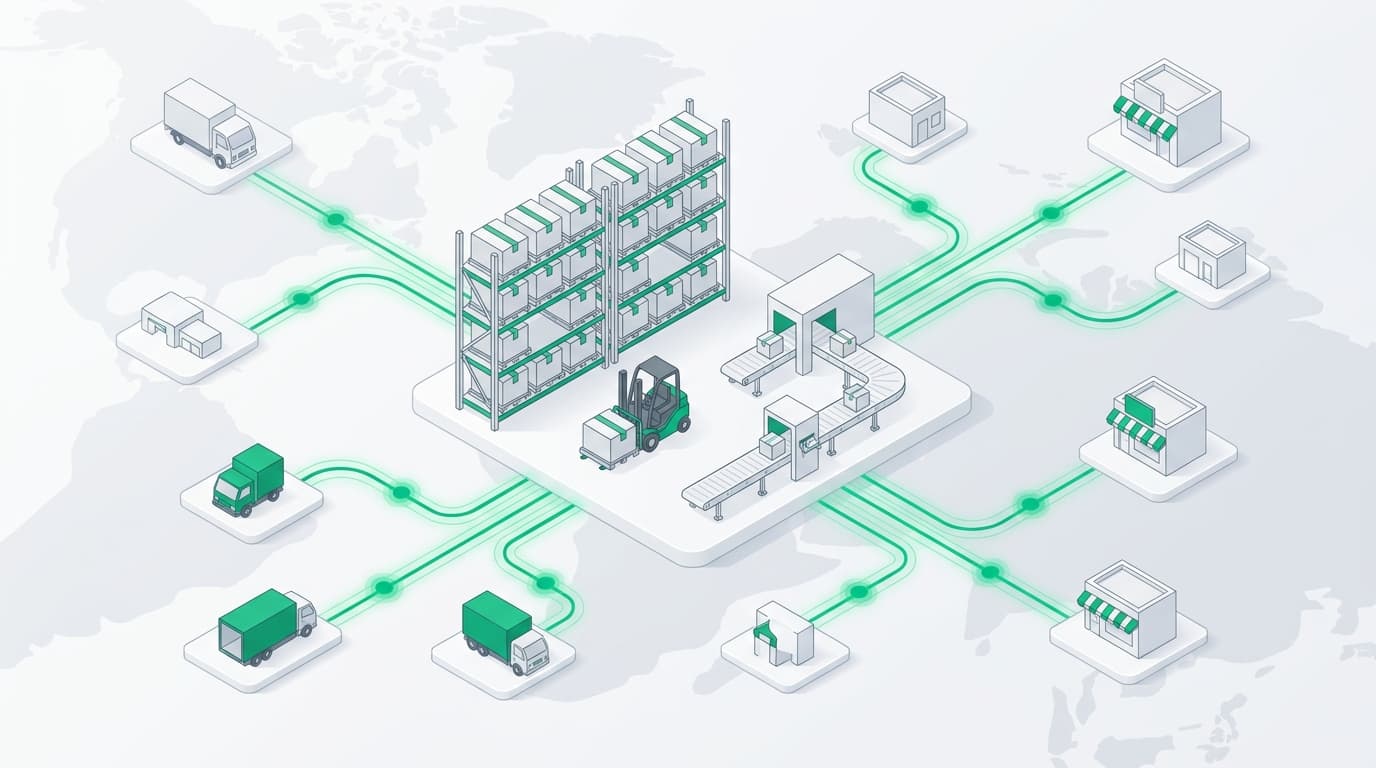
A distributor's supply chain is its business. You do not manufacture the product, so your edge is how well you buy, hold, and move it. Generic supply chain management software was mostly built for manufacturers and large retailers, which is why so much of it fits distribution awkwardly. These are the seven supply chain software solutions that actually matter for distributors, and what to look for in each.
What distributors need from supply chain software
Distributors live and die on availability and cash. The right supply chain management software keeps the right inventory in the right place without tying up working capital, and it does so without forcing your team to babysit a stack of disconnected tools. Each solution below should be judged against that standard.
The 7 solutions that matter
1. Demand-driven replenishment
The single highest-impact capability. Replenishment that calculates reorder points from real demand velocity, lead times, and safety stock, then suggests purchase orders automatically, is what keeps cash from getting trapped in slow stock or lost to stockouts.
2. Multi-location inventory optimization
Distributors rarely operate from one building. Software that balances stock across branches, transfers intelligently, and gives one accurate view of availability everywhere prevents the classic problem of a stockout in one location while the same item gathers dust in another.
3. Supplier collaboration
Your vendors are part of your supply chain. Tracking purchase orders, acknowledgments, terms, and inbound timing in one place reduces the daily back-and-forth and lets you catch a late shipment before it becomes a customer problem.
4. Warehouse execution
Receiving, putaway, picking, and packing drive your fulfillment speed and accuracy. Barcode and mobile workflows reduce mis-picks, and when warehouse activity updates inventory in real time, your available-to-promise stays honest.
5. Landed cost and margin control
Freight, duty, and surcharges are real costs that generic tools ignore until the invoice arrives. Folding them into landed cost on receipt keeps your true cost of goods, and therefore your margin, accurate at the moment you sell.
6. Real-time visibility and analytics
Fill rates, inventory turns, on-time delivery, and aging tell you where the supply chain is leaking. The value of analytics depends entirely on whether the underlying data is live and unified, or stitched together from exports.
7. Connected ordering: B2B ecommerce and EDI
A growing share of distribution orders arrive online or through EDI. When those channels read live inventory and pricing and write orders straight into your system, you remove a whole layer of manual entry and the errors that come with it.
Point solutions vs. a unified distribution platform
You can buy these seven as seven products, or get them on one distribution ERP. The trade-off is the same one every distributor faces: best-of-breed depth versus the cost of integrating and reconciling several systems. For most distributors, the efficiency gain is in unification, because a supply chain that runs on one real-time dataset does not need to be reconciled before it can be trusted.
How 10X ERP fits
10X ERP delivers these seven capabilities on a single, API-first platform built specifically for distributors. Replenishment, multi-location inventory, supplier collaboration, warehouse execution, landed cost, analytics, and connected ordering share one real-time system of record, with 10X AI layered on top so your team can ask questions and act on live data.
See it on your own workflows in a 30-minute demo, or compare 10X with the other systems distributors evaluate in our best ERP for distributors guide.
Frequently asked questions
What is supply chain management software for distributors? It is software that helps distributors plan, buy, store, and move inventory efficiently. The most useful versions for distributors unify replenishment, multi-location inventory, supplier collaboration, warehouse execution, and analytics rather than treating them as separate tools.
Which supply chain solution has the biggest impact for distributors? Demand-driven replenishment typically has the largest impact, because it directly controls both the working capital tied up in inventory and the stockouts that cost sales.
Do distributors need separate supply chain and ERP systems? Usually not. A distribution ERP already includes the core supply chain capabilities, which avoids the integration and reconciliation overhead of running supply chain software separately from the system that handles orders and accounting.
Ready to Transform Your Distribution Business?
Let us help you implement solutions that drive real results.
Contact Us TodayGet insights delivered to your inbox
Product updates, distribution industry insights, and company news.
Related Articles
Prepare Your Distribution Operations for 2027
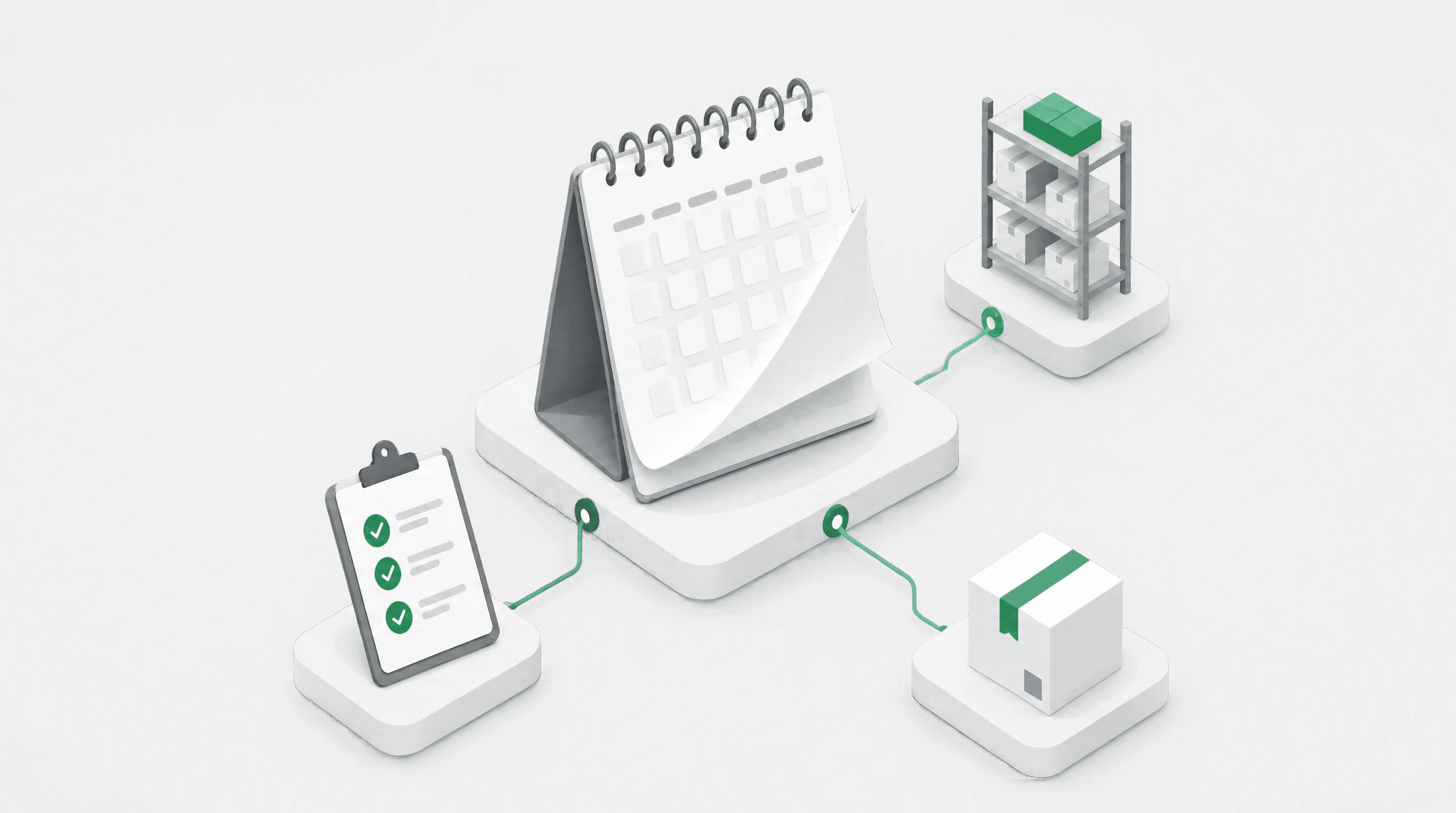
A Q4 checklist for fastener, sealing and industrial distributors, with real results from distributors who gained throughput, cleaner books and faster fulfillment.
Why vacation season exposes operational gaps in distribution businesses
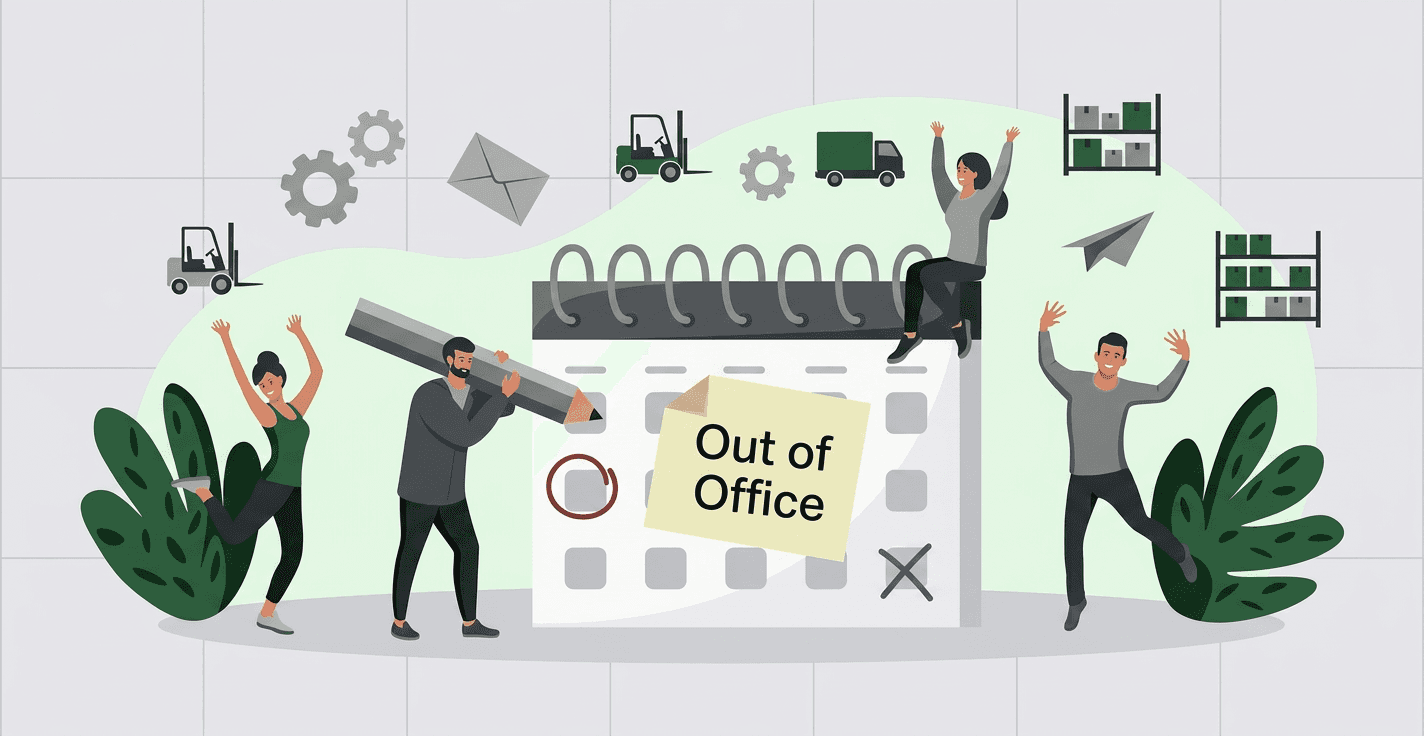
Every distribution business has that moment in July. A key person is out. A big order comes in. And suddenly everyone realizes the operation was running on tribal knowledge, not systems. Vacation season doesn't create operational gaps — it just makes them impossible to ignore. Here's why it happens and what distributors running on modern ERP do differently.
The 8 Essential ERP Modules Every Distributor Needs
A distribution ERP is only as good as its modules. Here are the 8 essential ERP modules for distributors, what each one does, and why they work best on one platform.