

Wholesale Distribution Software: 10 Capabilities That Actually Drive Efficiency
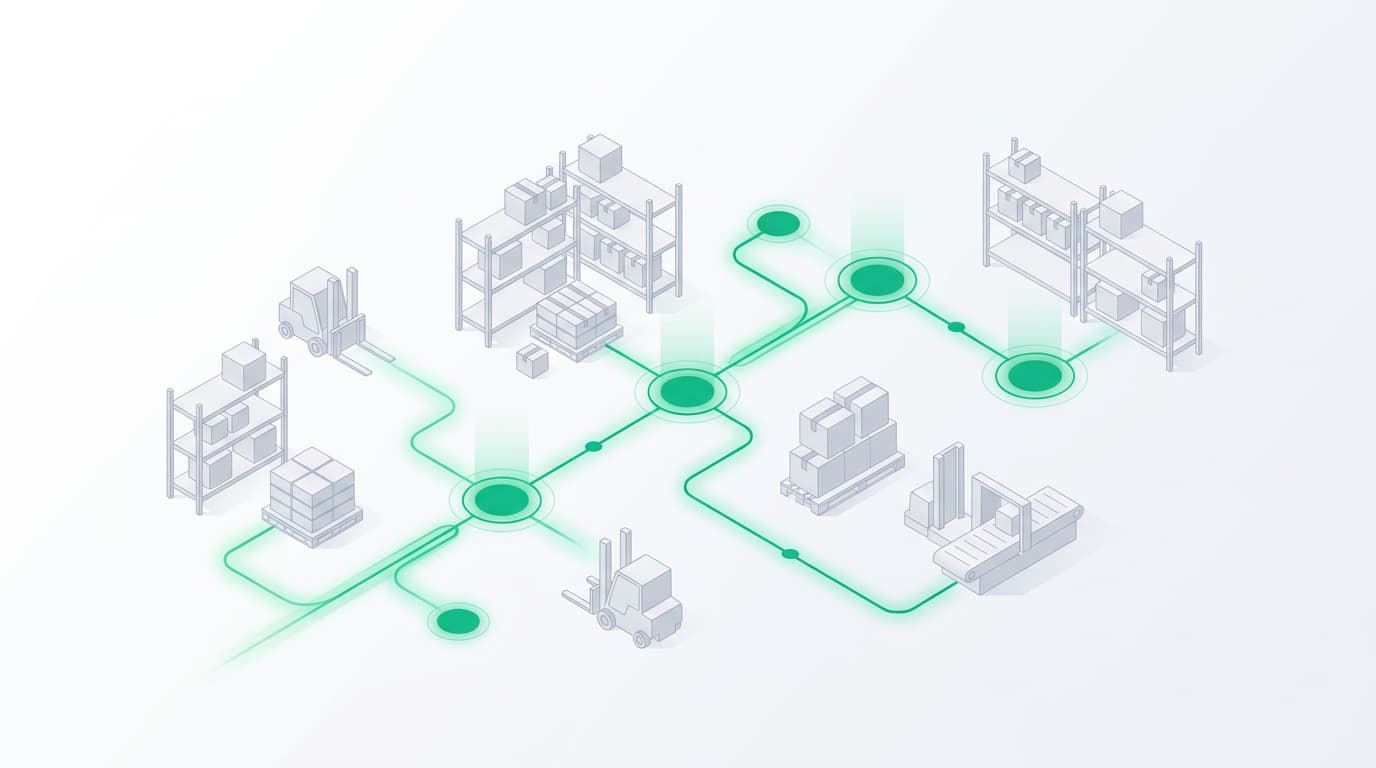
Most wholesale distributors do not have a software problem. They have a too much software problem. Inventory lives in one system, accounting in another, the webstore in a third, and a warehouse app on top of that. Every handoff between them is a place for data to drift, for a number to go stale, and for someone to re-key an order by hand.
Wholesale distribution software is supposed to fix that. The best of it runs your entire operation, from the purchase order to the packing slip to the general ledger, as one connected system. This guide breaks down the ten capabilities that actually move the needle on efficiency, and how to tell a real distribution platform from a generic tool with "distribution" in the marketing.
What is wholesale distribution software?
Wholesale distribution software is the system a distributor uses to manage the flow of goods and money through the business: buying inventory, storing it, selling it, shipping it, and accounting for all of it. Strong wholesale distribution software treats inventory, orders, purchasing, warehouse activity, and financials as one real-time dataset instead of separate apps stitched together with exports and overnight syncs.
That distinction matters more for distributors than for almost any other kind of business. A distributor's margin lives in the details: landed cost, units of measure, backorders, customer-specific pricing, and vendor terms. When those details are spread across disconnected tools, the efficiency you were promised quietly leaks back out.
The 10 essential capabilities
1. Real-time inventory management
Inventory is the heart of a distribution business, so this is where software earns or loses its keep. You need accurate quantities across every warehouse and bin, native unit-of-measure conversion (buy by the case, sell by the each), and support for lot and serial tracking where your products demand it. The key word is real time: when a line ships, available-to-promise should update instantly, not after a nightly batch.
2. Order management and order-to-cash
From quote to order to invoice to cash, the path should be one continuous workflow. Look for fast order entry, visibility into backorders and allocations, drop-ship and special-order handling, and credit limits and terms enforced at the moment of order entry rather than caught later by accounting. Every minute saved here repeats on every order, every day.
3. Purchasing and automated replenishment
Buying too early ties up cash; buying too late costs the sale. Good wholesale distribution software calculates demand-driven reorder points using sales velocity, lead time, and safety stock, then suggests purchase orders you can approve with a click. It should also fold freight, duty, and other charges into landed cost on receipt so your true cost of goods is right the first time.
4. Warehouse management
The warehouse is where efficiency is won or lost in physical motion. Directed receiving, barcode-driven picking, and mobile workflows reduce mis-picks and shrink the time between an order landing and a truck leaving the dock. Even a lightweight, well-integrated warehouse layer beats a powerful one that does not talk to your inventory in real time.
5. Pricing and quoting
Distributors rarely sell at one price. Customer-specific pricing, contract and tiered pricing, quantity breaks, and margin guardrails all need to live inside the system, applied automatically at order entry. When pricing logic is consistent and built in, your team quotes faster and stops giving away margin by accident.
6. Customer and relationship management
Your reps need the full customer picture in one place: order history, open quotes, current balance, credit status, and past conversations. CRM that is bolted on as a separate product tends to fall out of date. CRM that shares the same data as orders and accounting stays accurate because it is the same system.
7. Accounting and financials
This is the capability most often left out of "distribution software," and the omission is expensive. When accounting is built into the platform, receiving, shipping, invoicing, and payments post to the general ledger as they happen. Inventory value on the balance sheet always ties to what is on the shelf, and cost of goods sold is accurate by design rather than reconciled after the fact. (For more on why this matters, see accounting software for distributors and the difference between ERP and accounting software.)
8. B2B ecommerce and EDI
Buyers increasingly expect to order online and through electronic data interchange. A connected webstore and EDI that read live inventory and pricing, and write orders straight into the same system, remove a whole category of manual entry. Disconnected ecommerce, by contrast, just creates a new pile of orders for someone to retype.
9. Reporting, dashboards, and analytics
You cannot improve what you cannot see. Real-time reporting on margin by product line, customer, and sales rep, plus inventory turns, fill rates, and aging, turns your data into decisions. The advantage of a unified platform is that every report draws from one source of truth, so the numbers actually agree across the business.
10. Open integrations and an API
No single system does everything, so the question is whether yours is open. An API-first platform lets you connect a specialized tax engine, a freight rate shopper, a bank feed, or your own BI stack without brittle middleware or manual exports. Modern platforms also build AI on top of that open foundation, so you can ask questions of your live business data in plain English instead of waiting on a report.
Point solutions vs. an all-in-one distribution ERP
You can assemble these ten capabilities two ways: stitch together best-of-breed point solutions, or run them on one distribution ERP.
Point solutions can look attractive feature by feature, but every integration you add is another sync to maintain and another seam where data drifts. The total cost shows up as reconciliation work, stale numbers, and a team that spends its day moving information between systems.
An all-in-one distribution ERP runs inventory, orders, purchasing, warehouse, CRM, and accounting on a single real-time dataset. There is nothing to sync because there is only one system of record. For most wholesale distributors, that unification is the efficiency gain, more than any individual feature.
How to choose wholesale distribution software
A few questions cut through the noise:
Was it built for distribution, or adapted to it? Native concepts like units of measure, landed cost, branches, and customer-specific pricing are hard to bolt onto a generic system after the fact.
Is it one system or several? Ask specifically how inventory and accounting stay in sync. "We integrate with QuickBooks" is not the same as a built-in general ledger.
Is it open? A documented API determines whether you can connect the rest of your tools, now and later.
Will it fit your size? Smaller distributors searching for wholesale distribution software for small business should weigh transparent pricing and fast implementation as heavily as the feature list. The right platform should grow with you, not require a rip-and-replace at your next stage.
What does support look like? When something breaks during a shipping crunch, you want people who understand distribution, not a generic ticket queue.
Why distributors run on 10X ERP
10X ERP was built from the ground up for wholesale and industrial distribution. Inventory, orders, purchasing, warehouse, CRM, and accounting run on one real-time, API-first platform, with 10X AI built into every layer so your team can ask questions and take action on live business data. It is the unified system this guide describes, purpose-built for how distributors actually operate.
If you want to see what running your whole operation on one system looks like, schedule a 30-minute demo. No pressure, just a real look at your workflows on 10X ERP. You can also compare 10X with the other ERPs distributors evaluate.
Frequently asked questions
What is wholesale distribution software? It is the system a distributor uses to manage inventory, orders, purchasing, warehouse activity, and accounting. The most effective wholesale distribution software runs all of those functions on one real-time platform rather than as separate, synced applications.
What is the difference between distribution software and a distribution ERP? "Distribution software" often refers to a single-purpose tool, such as inventory or order management. A distribution ERP unifies all of those functions, including accounting, on one system of record, which is why it eliminates the syncing and re-keying that point solutions create.
Is there wholesale distribution software for small businesses? Yes. Smaller distributors are often best served by an all-in-one platform with transparent pricing and a fast implementation, because it avoids the cost and complexity of integrating several separate tools as they grow.
Does wholesale distribution software include accounting? The strongest platforms do. When accounting is built in, inventory value and cost of goods sold stay accurate automatically because financial entries post as operations happen, instead of being reconciled later from an export.
Ready to Transform Your Distribution Business?
Let us help you implement solutions that drive real results.
Contact Us TodayGet insights delivered to your inbox
Product updates, distribution industry insights, and company news.
Related Articles
Why vacation season exposes operational gaps in distribution businesses
Every distribution business has that moment in July. A key person is out. A big order comes in. And suddenly everyone realizes the operation was running on tribal knowledge, not systems. Vacation season doesn't create operational gaps — it just makes them impossible to ignore. Here's why it happens and what distributors running on modern ERP do differently.
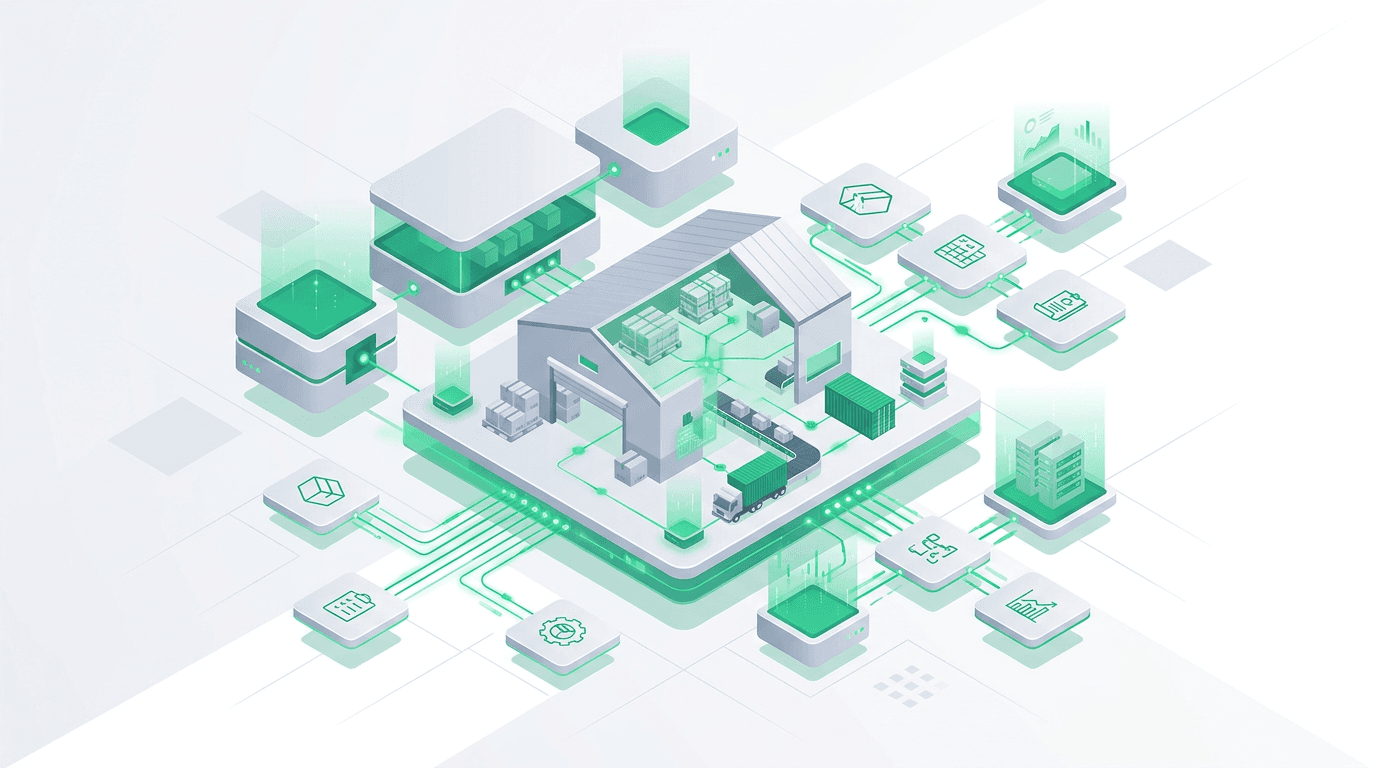
The 8 Essential ERP Modules Every Distributor Needs
A distribution ERP is only as good as its modules. Here are the 8 essential ERP modules for distributors, what each one does, and why they work best on one platform.
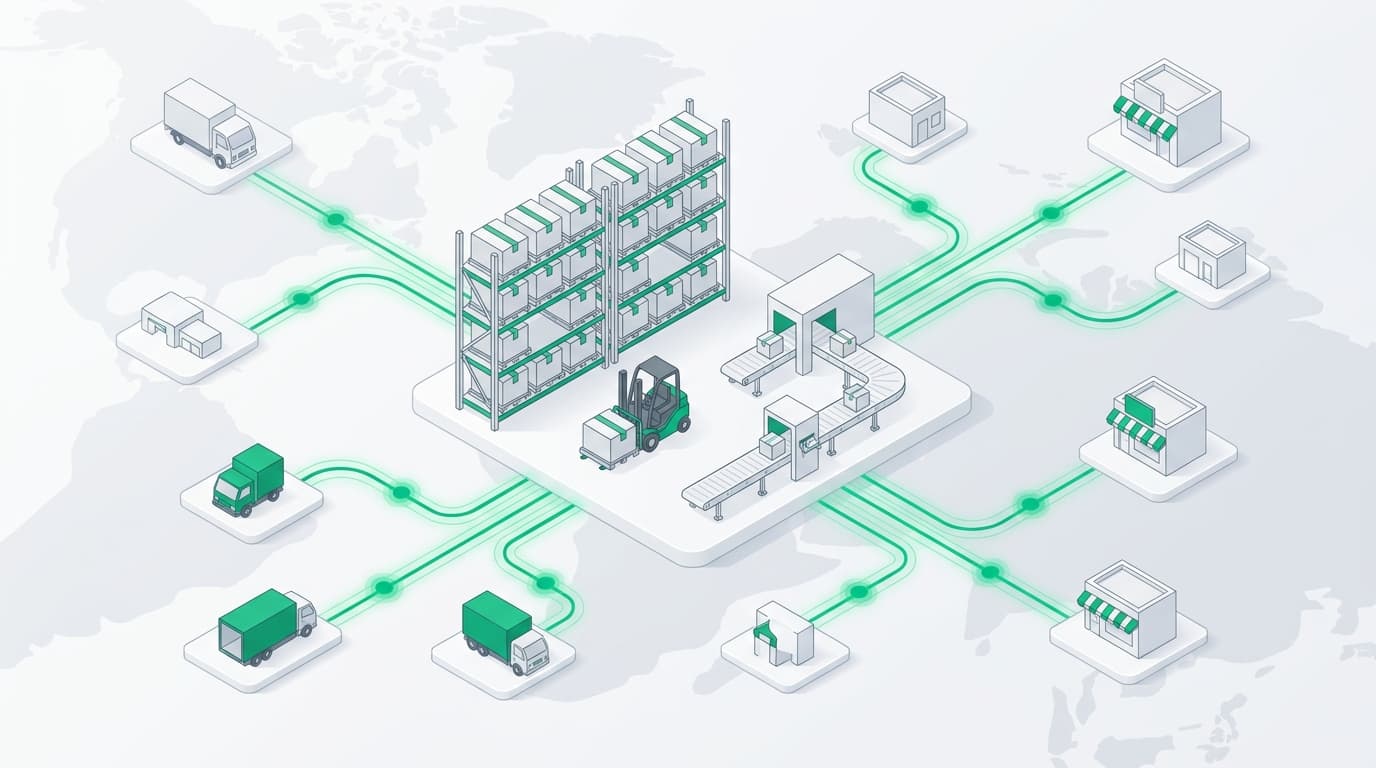
Supply Chain Management Software for Distributors: 7 Solutions That Matter
The seven supply chain management software capabilities that actually move the needle for distributors, from replenishment to supplier collaboration to real-time visibility.