

Preparing for Supply Chain Disruption: How ERP Is Your Most Critical Risk Hedge
Summary
- Supply chain disruptions are inevitable, but ERP systems like 10X ERP provide real-time visibility and automation to help distributors respond proactively.
- By enabling multi-vendor management, predictive forecasting, and automated workflows, ERP reduces risk and improves operational efficiency.
- ERP also strengthens customer communication and financial visibility, helping businesses maintain trust and profitability during disruptions.
Supply chain disruption is no longer an occasional inconvenience. It is a constant reality. From global events such as pandemics, tariffs, and geopolitical conflicts to localized issues like vendor failures, freight bottlenecks, or natural disasters, distributors operate in an environment where disruption has become the norm rather than the exception.
The question is not whether your supply chain will be disrupted, but when. The key to resilience is preparation. This is where a modern ERP system such as 10X ERP becomes one of the most powerful tools for managing risk. By centralizing data, automating workflows, and delivering real-time visibility, ERP equips distributors to survive disruptions and turn them into competitive advantages.
Real-Time Visibility into Supply Chain Health
One of the greatest challenges during disruption is understanding exactly what is happening across the supply chain. Without a clear view of inventory levels, vendor performance, and order status, businesses are often left guessing.
ERP platforms provide real-time visibility across the entire supply chain. Distributors can see purchase orders in transit, backordered items, and current inventory levels across warehouses in one system. If a shipment is delayed, teams can adjust plans proactively instead of reacting after the problem escalates.
Multi-Vendor Management as a Safety Net
Relying too heavily on a single supplier creates significant risk. If that supplier experiences a shutdown or delay, the entire business may be affected.
ERP systems allow distributors to manage multiple vendors for the same product while tracking vendor-linked inventory and performance data. Vendor scorecards make it possible to benchmark suppliers based on delivery reliability, product quality, and cost stability. When disruptions occur, businesses can quickly shift to alternative suppliers using data-driven insights instead of guesswork.
Automated Replenishment and Forecasting
Supply chain disruption often exposes weaknesses in manual planning. By the time a team realizes demand is increasing or shipments are delayed, the opportunity to respond may already be limited.
ERP automation addresses this challenge by combining predictive forecasting with automated replenishment triggers. The system can anticipate changes in demand, monitor reorder points, and recommend adjustments to purchasing strategies based on real-time data.

Strengthening Customer Communication
Supply chain disruptions affect more than operations. They also affect customer trust. When customers are left without updates about delays or product availability, relationships can suffer.
ERP improves communication by automating many aspects of the order process. Order confirmations, shipping updates, and proactive delay notifications can be generated automatically. Integration with EDI and CRM systems ensures customers receive consistent and accurate information throughout the order lifecycle.
Financial Risk Mitigation
Every disruption carries financial consequences, including expedited shipping costs, lost sales opportunities, or excess inventory.
ERP provides financial clarity through integrated cost tracking, tariff management, and margin analysis. When freight surcharges increase or tariffs change, the impact becomes visible immediately. Sales teams can then adjust pricing or margins accordingly to protect profitability.
Building Resilience with Data-Driven Insights
ERP systems are not only valuable during disruptions. They also help organizations prepare for future challenges. With historical and predictive analytics, distributors can analyze supplier performance, freight volatility, and customer demand patterns to improve long-term planning.
For example, if historical data shows that a supplier consistently struggles during the fourth quarter, purchasing teams can adjust sourcing strategies or inventory levels ahead of time. ERP transforms disruptions into learning opportunities that strengthen future resilience.
Practical Steps for Distributors to Prepare Now
To maximize ERP as a hedge against disruption, distributors can adopt several best practices:
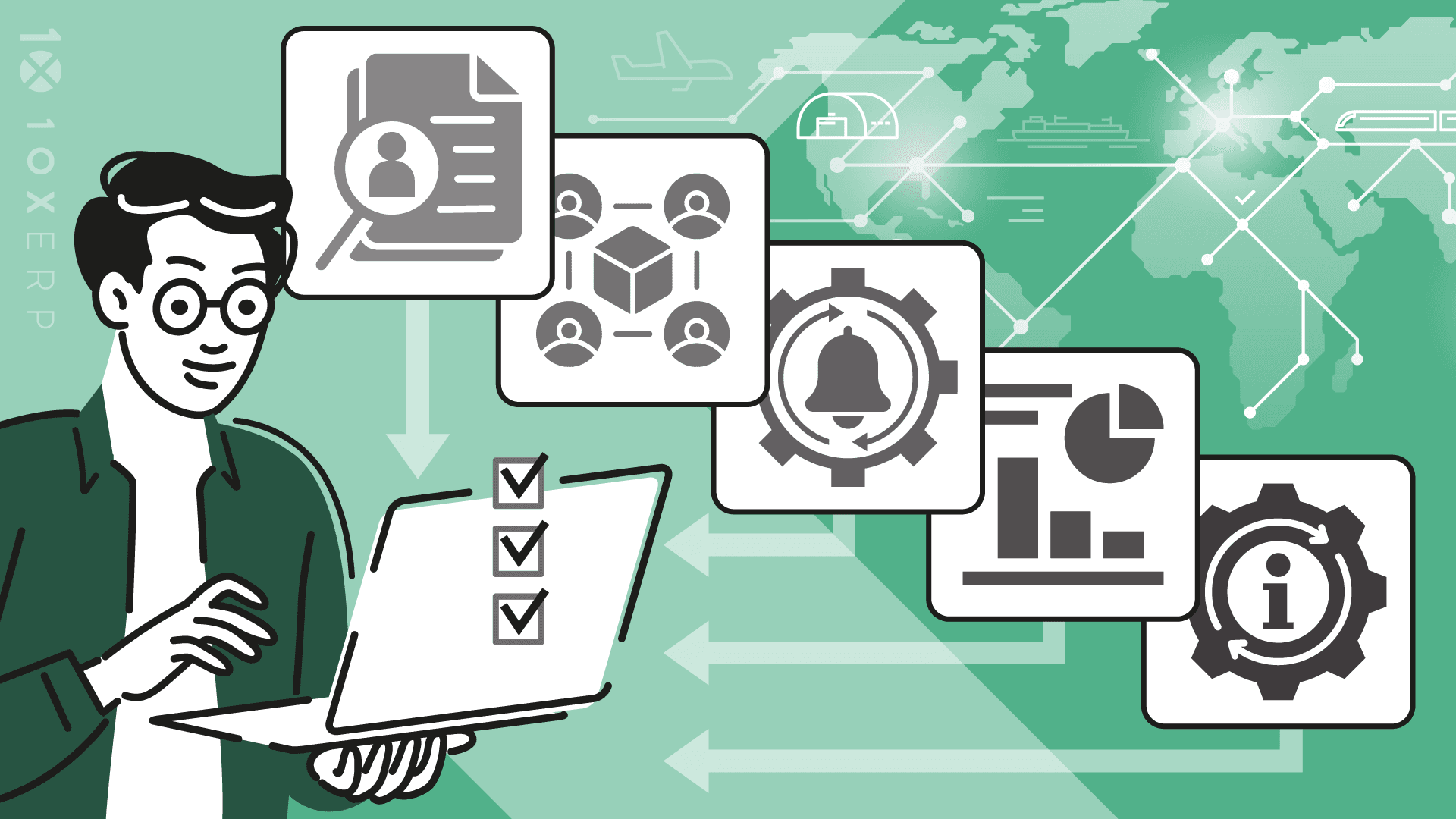
Audit Suppliers Use ERP vendor scorecards to evaluate supplier reliability, delivery performance, and quality metrics.
Diversify Sources Ensure that multiple vendor options exist for critical products to reduce dependency on a single supplier.
Automate Alerts Configure ERP alerts to notify teams about shipment delays, low inventory levels, or cost changes.
Leverage Forecasting Use predictive analytics to anticipate demand shifts and adjust purchasing plans accordingly.
Prioritize Transparency Keep customers informed with automated updates and proactive communication about order status.
Conclusion
Supply chain disruption is not going away. It is evolving. Distributors that rely on outdated tools and manual processes will continue to struggle, while those that adopt modern ERP systems will be better positioned to succeed.
10X ERP provides the visibility, automation, and insights distributors need to reduce risk, strengthen vendor relationships, and maintain customer confidence regardless of global market conditions.
The bottom line is simple. Disruptions cannot always be controlled, but the response to them can be. With the right ERP platform in place, distributors gain the tools they need to stay resilient and move forward with confidence.
Ready to Transform Your Distribution Business?
Let us help you implement solutions that drive real results.
Contact Us TodayGet insights delivered to your inbox
Product updates, distribution industry insights, and company news.
Related Articles
Why vacation season exposes operational gaps in distribution businesses
Every distribution business has that moment in July. A key person is out. A big order comes in. And suddenly everyone realizes the operation was running on tribal knowledge, not systems. Vacation season doesn't create operational gaps — it just makes them impossible to ignore. Here's why it happens and what distributors running on modern ERP do differently.
The 8 Essential ERP Modules Every Distributor Needs
A distribution ERP is only as good as its modules. Here are the 8 essential ERP modules for distributors, what each one does, and why they work best on one platform.
Supply Chain Management Software for Distributors: 7 Solutions That Matter
The seven supply chain management software capabilities that actually move the needle for distributors, from replenishment to supplier collaboration to real-time visibility.